
How nonprofits can better support connection, engagement, and long-term generosity across generations.
In recent years, many nonprofits have experienced a growing tension between how donors want to engage and how fundraising programs are traditionally structured. Annual giving teams are navigating shifting expectations around communication, participation, and long-term connection while continuing to rely on approaches that were designed for a more linear, campaign-focused environment.
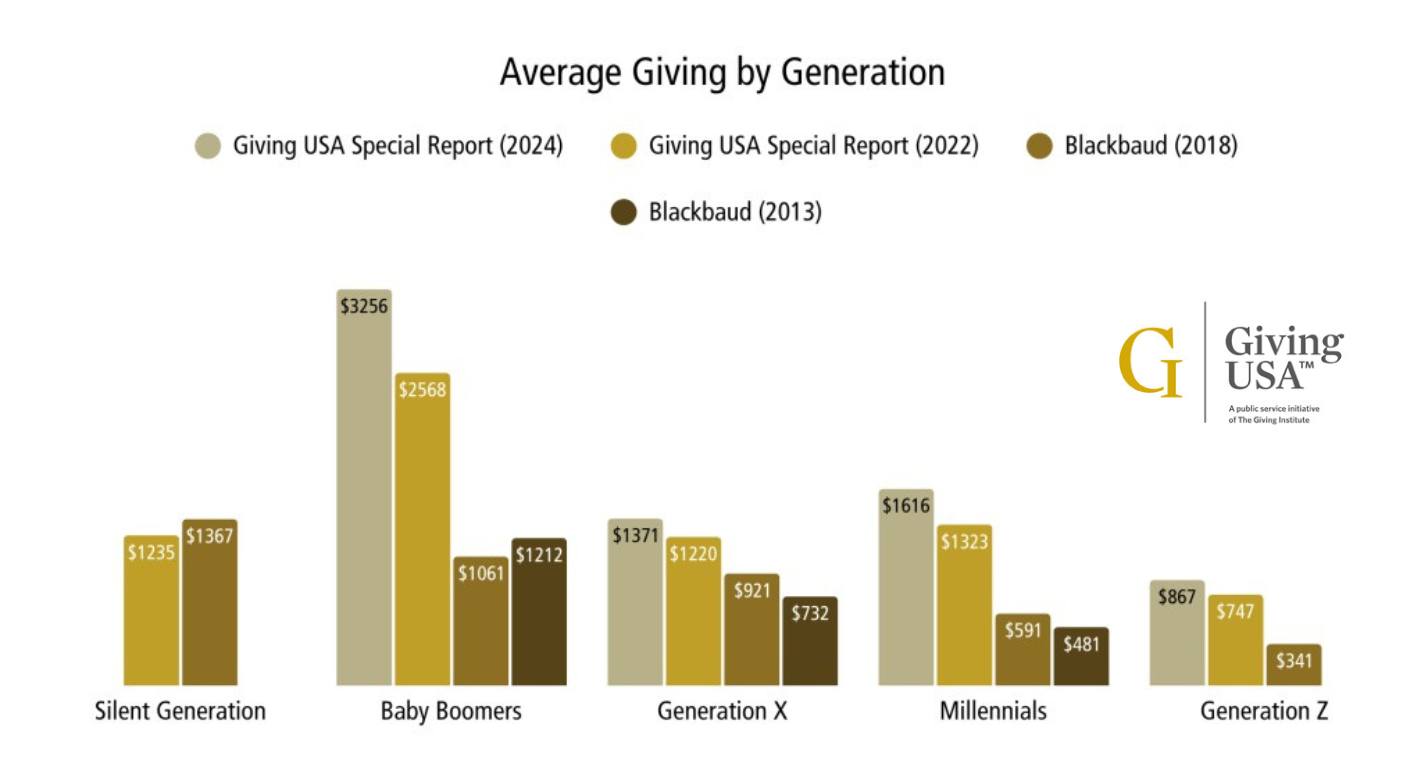
The Giving USA Special Report, Generations and Giving, helps explain why this tension exists. By synthesizing decades of research on giving, volunteering, and engagement, the report highlights patterns that cut across generations and organizational types.
Rather than pointing to a single dominant model of generosity, the research reinforces that donor behavior reflects a mix of values, personal circumstances, and opportunities for connection that evolve over time.
What the Research Reinforces About Donor Engagement
One of the clearest signals in the report is the close relationship between engagement and generosity. Donors do not simply move from interest to gift in a straight line. Instead, different forms of involvement reinforce one another over time.
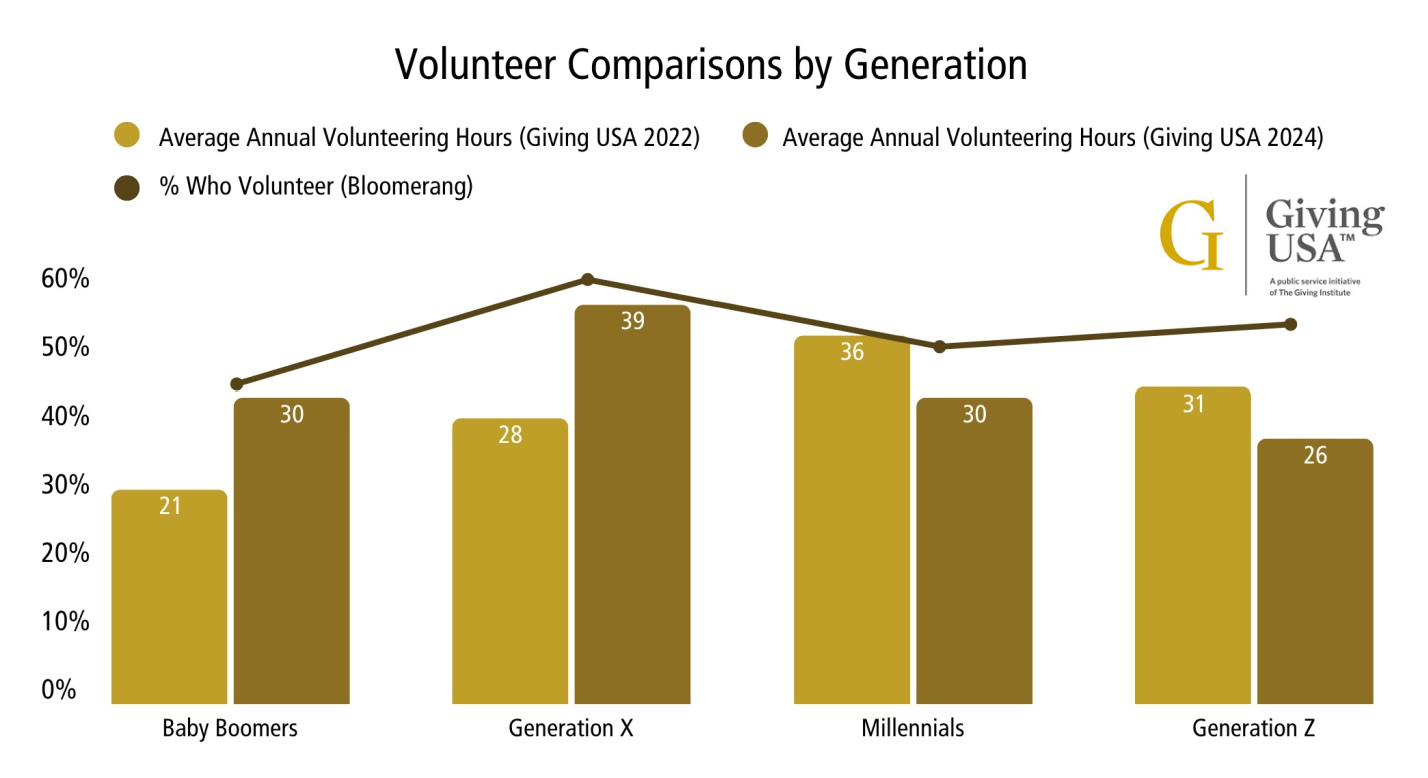
The research shows that individuals who volunteered in the previous year were 14.5% more likely to give in the current year, while those who gave were 9.3% more likely to volunteer the following year. This pattern appears across generations and reinforces an important reality for annual giving teams: Engagement is not separate from fundraising. It is often a leading indicator of future support.
At the same time, the report notes that donor retention continues to decline across the sector, even as generosity remains present across age groups. For annual giving programs, this points to a critical takeaway. Retention challenges are less about donor willingness and more about donor experience. When donors do not clearly see the impact of their giving or feel a sustained sense of connection, relationships weaken over time.
Together, these insights reinforce the importance of investing in how donors experience their relationship with an organization. Retention improves when donors understand the difference their support makes and feel consistently acknowledged, informed, and valued.
Donor Relationships are Through Continuity, not Moments
Another consistent theme in the research is that donor relationships are shaped by patterns rather than isolated interactions. Giving decisions are influenced by what comes before and after the ask—not just by the appeal itself.
Campaigns and solicitations remain essential to annual giving, but they are part of a broader experience that unfolds over time. Donors engage in different ways at different points in their lives. They may volunteer first, give occasionally, increase support during periods of stability, or step back and reengage later. What builds trust is not constant solicitation, but continuity, relevance, and follow-through.
For annual giving teams, this reinforces the value of thinking beyond individual moments of conversion and focusing instead on the cumulative experience donors have across touchpoints. Lasting relationships are built when organizations show consistency in how they communicate impact, recognize involvement, and respond to donor interests over time.
“Seeing themselves as active participants in their philanthropy, next-generation donors often first get involved with causes… through volunteering, utilizing their time not only to serve, but also to learn more about nonprofit organizations.” —Indiana University Lilly Family School of Philanthropy (2025)
Supporting Donors Across Different Pathways
The report also highlights the growing diversity in how donors engage with causes they care about, creating both opportunity and complexity for annual giving programs. There is no single pathway into giving, and no singular way donors stay connected.
One area of alignment across generations is how information is consumed. Research cited in the report shows that 93% of adults in the United States consume news online, with video playing a significant role across age groups. While younger donors may be video-first, video has become a universal medium for storytelling, learning, and connection. For annual giving teams, this reinforces the value of video not only for acquisition, but for helping existing donors see and understand impact between asks.
The report also points to the expanding use of philanthropic tools such as donor-advised funds (DAF). For annual giving programs, recognizing DAF contributions as part of an ongoing donor relationship, rather than a separate lane, helps preserve continuity in stewardship and engagement.
Organizations are best positioned when they can recognize and support these varied pathways as part of a single, ongoing relationship. Whether a donor gives directly, contributes through a donor-advised fund, volunteers time, or engages through content and storytelling, each interaction strengthens the overall connection.
Looking Ahead
Taken together, the Generations and Giving report offers confirmation of what many nonprofit leaders already observe in practice. Donor behavior is not static, generosity is shaped by experience, and relationships develop through sustained engagement over time.
For nonprofits, the opportunity lies in continuing to invest in approaches that prioritize clarity, relevance, and connection. By focusing on the full donor experience and supporting engagement across different pathways, organizations can build the kind of lasting relationships that sustain generosity across generations.
For organizations looking to explore these ideas further, BWF’s recent whitepaper, Redefining the Annual Giving Playbook, examines how evolving donor expectations are reshaping annual giving strategies and what that means for engagement, participation, and long-term growth.
And for leaders interested in reflecting on how their own donor engagement efforts are positioned today, we welcome the opportunity to continue the conversation. You can learn more about our work or connect with our team through our contact form.