
The 2020s have been the most transformative decade in the history of advancement services offices.
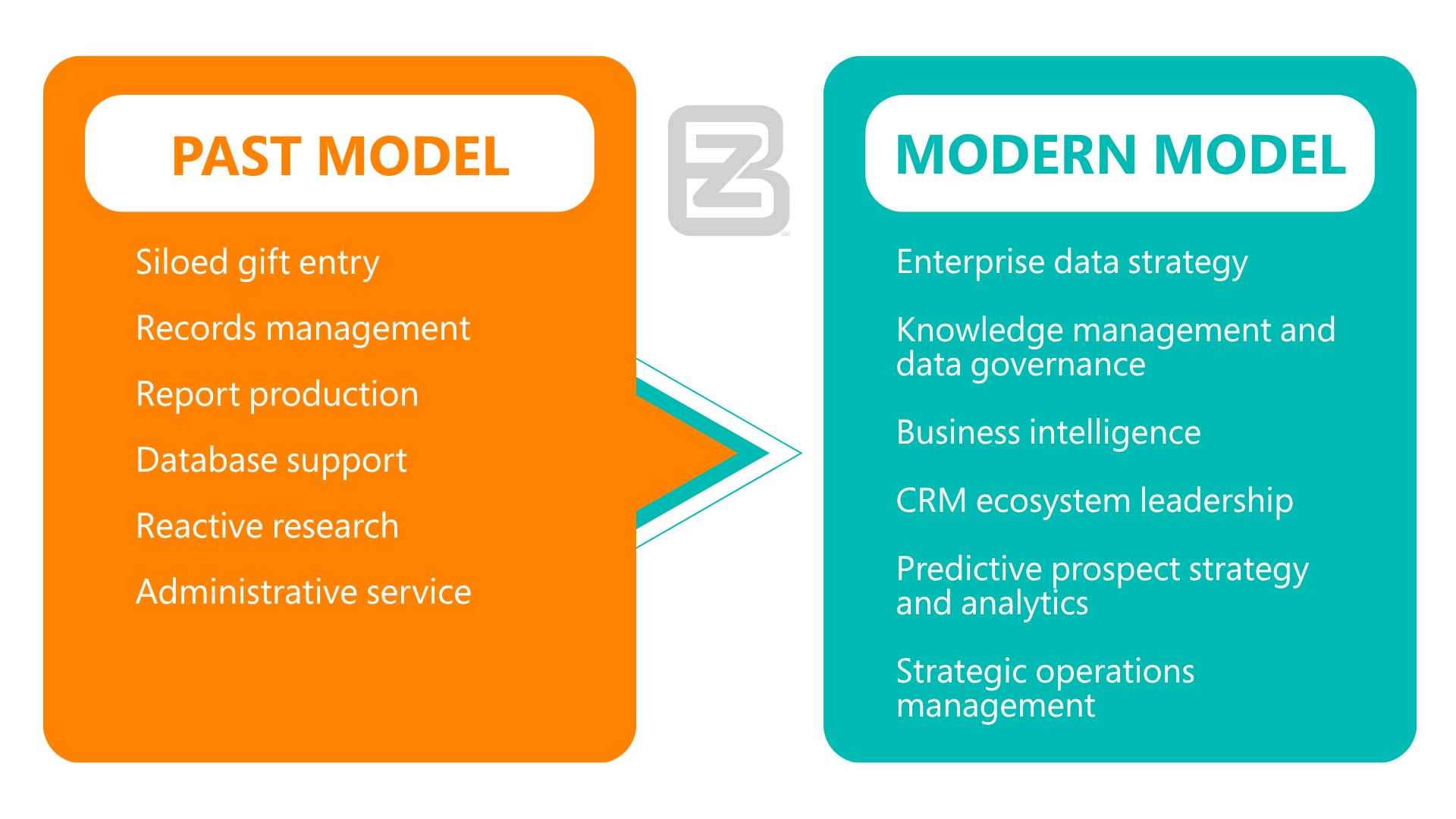
Prior decades focused primarily on improving efficiency within established functions—gift processing, records, reporting, prospect research, and donor engagement. The 2020s have fundamentally changed the mission of these offices. Increasingly, they serve as strategic business partners responsible for enabling fundraising performance, driving decision-making, and accelerating digital innovation. Advancement services has evolved from a transaction-centered administrative function into a transformational operating system for modern fundraising.
The highest performing advancement operations offices today are no longer “back office” support teams. They are strategic partners that connect data, technology, people, process, and donor experience. They are recognized under new names that speak to their new model. They are better understood as offices of strategy, insight, and innovation.
Evolution of the Field
Although many consider advancement operations teams to be a continuation of advancement administrative service functions, the unit is in fact born out of the information age. Advancement operations teams are a direct by-product of the demand for in-house access to information, along with the systems and staff needed to produce and support it. Data is the central organizing principle in the evolution of advancement operations teams.
By the 2010s, many institutions began shifting from “Advancement Services” or “Development Services” to names such as Advancement Operations, Strategic Operations, Strategic Information, or Advancement Strategy and Operations. These names reflected broader responsibility for planning, analytics, campaign management, technology, innovation, and business operations. COVID-19 accelerated this shift by making cloud systems, remote access, digital engagement, data quality, and technology support essential to fundraising continuity.
Today, the field is entering another stage: AI-enabled, data-governed, insight-driven advancement.
Why Strategy, Insight, and Innovation Matter More Now
CASE’s DRIVE 2025 programming focused on data management, mining, analytics, visualization, governance, artificial intelligence, and turning data into action. These are central advancement priorities for modern fundraising, and yet most organizations are unprepared to deliver against them, lacking the governance or infrastructure necessary to keep pace with donor expectations.
Today’s consumer wants a branded, personalized experience. They also want a trusted and consistent experience across the institution, and an institution that knows them. Whether it is a social media platform or a retailer, consumers have become accustomed to rapid, customer-focused service from a company that not only knows everything about their history but can also predict their future desires.
At the same time, advancement leaders face pressure to justify investments, optimize staffing, retain talent, and personalize donor engagement at scale.
Five Characteristics of High-Performing Advancement Operations Offices
1. They treat data as institutional infrastructure.
High-performing advancement operations offices formalize data governance, define ownership, document business rules, monitor quality, and connect data standards to fundraising outcomes. As nonprofit organizations, privacy regulations, gift administration, and technology ecosystems become progressively complex, data governance and compliance are increasingly vital. Responsibilities now include data standards, legal compliance, philanthropic due diligence, report oversight, issue resolution, data quality metrics, and ever-improving data management. Oversight of these functions requires trained, well-compensated professionals.
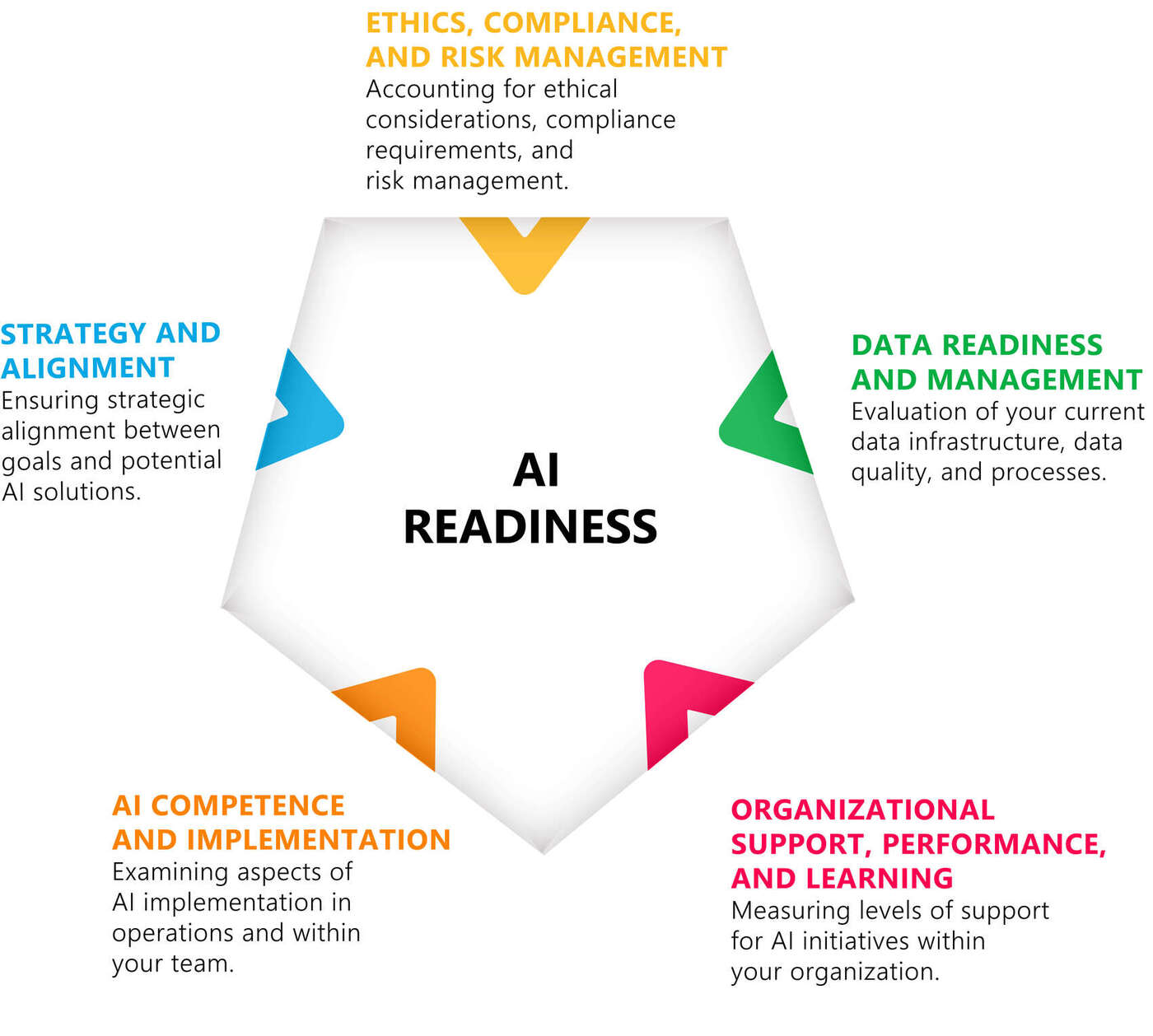
This is now even more important because AI depends on reliable data. CASE’s generative AI research offers pathways to adoption across stages and focus areas, emphasizing leadership and policy considerations, support needs, use cases, and implementation challenges. In other words, AI readiness begins with data readiness.
2. They invest in technology as strategy, not overhead.
Technology projects are organizational projects, not merely IT projects. The entire organization needs to understand the work being done. Transparent prioritization, backlog management, and communication are essential. The Association of Governing Boards of Universities and Colleges (AGB) frames technology and data as central to “future-proof” fundraising, noting the relevance of AI tools for advancement leaders, foundation boards, and board professionals.
2025 fundraising research from both Salesforce and Blackbaud explicitly tied AI attitudes and digital maturity to fundraising performance. Salesforce reported increased use of digital tools for engagement and fundraising but continued digital maturity disparities in the sector. Our BWF Zuri client experience similarly reflects that a growing technology ecosystem does not equate to a strategic technology plan that supports increased data maturity. Organizations that invest in technology without sound strategy and governance will not see the return they should from their investment.
3. They move from reporting to intelligence and insight.
Modern advancement operations teams do not simply produce reports. They help leaders and frontline fundraisers understand what the data means and what actions should follow.
Business intelligence (BI) provides accessible dashboards and real-time reporting that provide actionable data visualizations, while analytics and decision science produce insights that are not obvious at the individual-user level. Prospect development has likewise moved from reactive profiles to proactive prospect analytics, portfolio optimization, segmentation, and pipeline strategy.
4. They build staffing models around complexity and Return on Investment (ROI).
Previous advancement services staffing models often relied on staff-to-frontline-fundraisers ratios. More recently, offices shifted to staffing models based on system users, donor records, revenue, campaign size, technology complexity, and/or institutional goals. New research supports continued evolution based on dynamic levers shaped by mission, program maturity, and ROI expectations.
In 2012, CASE’s Advancement Investment Metrics Study (AIMS) began to reveal the need to shift towards a more robust advancement operations staffing model. AIMS findings highlighted that more mature fundraising teams benefitted from proportionately greater investments in advancement services and technology than in fundraisers. At the time, they found that higher education institutions were investing an average of 47.7% on fundraising and just 15.8% on advancement services. Later research from the Education Advisory Board (EAB) in 2017 validated this research, finding that top performing institutions, regardless of size, invested significantly more in advancement services staff than the lower performing institutions.
The most recent research from Bukky Gray at the University of Cambridge demonstrates, however, that adding to head counts based on generic ratios is not enough to guarantee success. The ROI of an additional technology administrator may not equate to the addition of a technology developer. The same holds true of differing positions on any team, from donor relations to fundraising. Planning for appropriate staffing requires a data-driven assessment of needs and ROI, yet Marts & Lundy found in a 2025 study that nearly 70% of nonprofits continue to rely exclusively on collaborative budgeting projections with leadership and half develop incremental budgets from prior years. Only about a quarter reported using internal ROI and cost per dollar raised data or forecasting to set their budgets.
Vanderbilt’s recent advancement growth initiative illustrates the importance of balancing staff across units and making data-informed decisions. After a 2016 review of their fundraising, Vanderbilt undertook a multi-year effort to transform an under-resourced operation into a data-driven, strategically aligned, sustainably scaled fundraising enterprise. Their story details how over a four-year period Vanderbilt translated targeted investments, cultural clarity, and intentional staff recruitment and development into record-breaking fundraising years and transformational growth in their advancement operations. Current research is clear that organizations operating at the highest levels in the current environment take a nuanced approach that is intentional, innovative, data-informed, and strategic. They have also shifted their budgets, placing substantially greater investment dollars in advancement services than their lower-performing counterparts.
5. They manage talent as a strategic capability.
To recruit and retain high-performing advancement operations staff in today’s market, these professionals need to be incorporated into advancement offices as fundraising peers and trained experts in their fields. They need to participate in strategic planning and be treated as full partners in achieving fundraising revenue goals.
Talent pressures reinforce the need to adapt to new norms to be competitive in the talent marketplace. Two recent studies—the 2023 aasp, BWF, and Lindauer career survey of more than 1,500 advancement services professionals and CUPA-HR’s 2025 retention survey of higher education staff—as well as an article from APRA—provide post-COVID-era insight into workforce retention and validate each other’s findings that staff expectations have changed and retention remains a critical concern. Staff want more from work, and they expect hybrid and remote work to be a standard part of the operating model.
Marts & Lundy’s Fundraising in the Flex Era studied how remote work has affected fundraising productivity, recruitment, retention, and culture. Their findings demonstrate that increased flexibility in the workplace improves recruitment and retention without impacting productivity and engagement, if implemented intentionally. Using technology to facilitate staff communication, as well as setting clear expectations and guidelines around attendance, scheduling, and performance, are all part of creating a successful environment for both the staff and the organization.
AI as the Next Operating Layer
AI is no longer peripheral to advancement operations. It is a productivity tool which cannot be ignored. It is becoming an integrated operating layer across prospecting, communications, workflow automation, reporting, donor engagement, and stewardship; however, as my colleagues at BWF Zuri indicate, adoption requires staged planning, leadership support, use cases, and attention to implementation barriers. The implication for advancement operations is clear: the office that governs data, manages systems, defines workflows, and trains users will also become the office that enables responsible AI adoption.
Strategic Recommendations
To operate as a high-performing advancement operation, offices should:
- Evaluate their operating model and determine if they are appropriately structured and resourced to meet modern fundraising needs.
- Establish formal data governance tied to fundraising outcomes.
- Treat their CRM, data, analytics, automation, and AI as strategic infrastructure.
- Build BI and analytics capabilities that move from descriptive reports to predictive and prescriptive insight.
- Visualize data for more effective decision-making.
- Replace static staffing ratios with dynamic models based on complexity, scale, ROI, and institutional ambition.
- Invest in talent development, a hybrid work strategy, change management, and career pathways.
- Position advancement operations leadership at the strategy table, not downstream from decisions.
- Consider changing their unit’s name to reflect the work they now perform.
Conclusion
Over recent decades, the field of advancement services has evolved from records and gift processing to advancement operations, strategic information, business intelligence, digital transformation, and now AI-enabled enterprise operations. Advancement operations is not merely an administrative function; it is a strategic engine for fundraising performance.
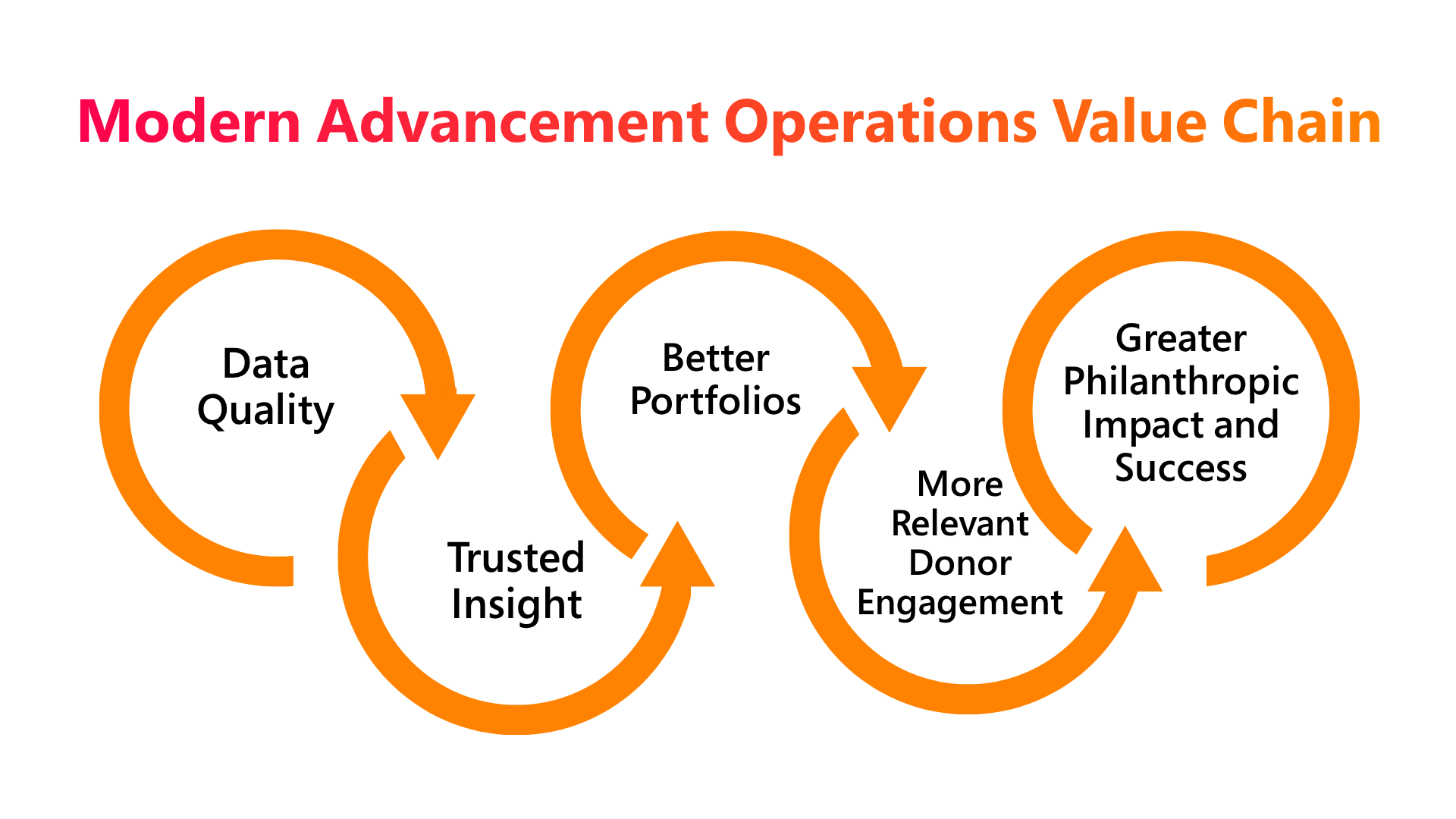
The highest-performing offices are those that integrate trustworthy data, modern technology, skilled professionals, disciplined governance, and human-centered fundraising strategy. As AI and digital maturity reshape advancement, advancement operations will increasingly determine whether institutions can convert information into insight, insight into action, and action into philanthropic impact.