
For nonprofit community hospitals, philanthropy has transitioned from a supplemental resource into a strategic imperative. As operating margins come under intense pressure, charitable giving has become a foundational component of the revenue mix, requiring the same level of rigorous oversight and board-level engagement as traditional clinical operations. Today, the strength of your hospital’s development program directly correlates with your ability to maintain high-quality patient experiences, conduct groundbreaking research, and sustain long-term institutional health.
Navigating this evolving landscape requires precise, actionable data. To support these efforts, BWF recently released the latest edition of our national survey, “What the Affluent Think About Giving to Healthcare.” While the complete results provide a comprehensive view of the sector, this article focuses specifically on the findings relevant to community hospitals.
By analyzing these donor motivations and expectations, leadership teams can refine their engagement strategies and build a sustainable donor retention framework to thrive in the current philanthropic environment.
1. Younger donors are gaining giving power.
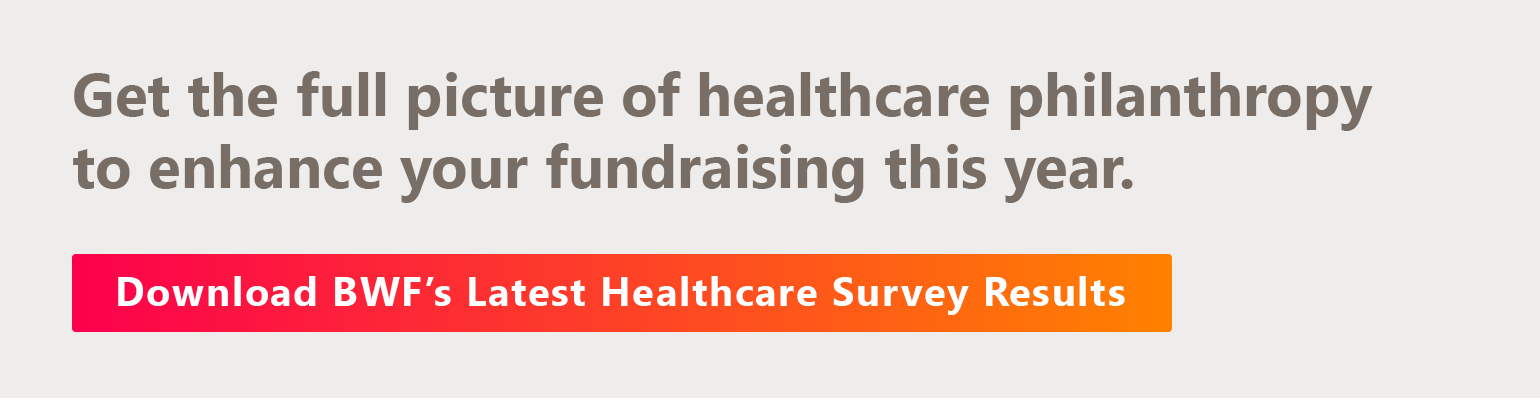
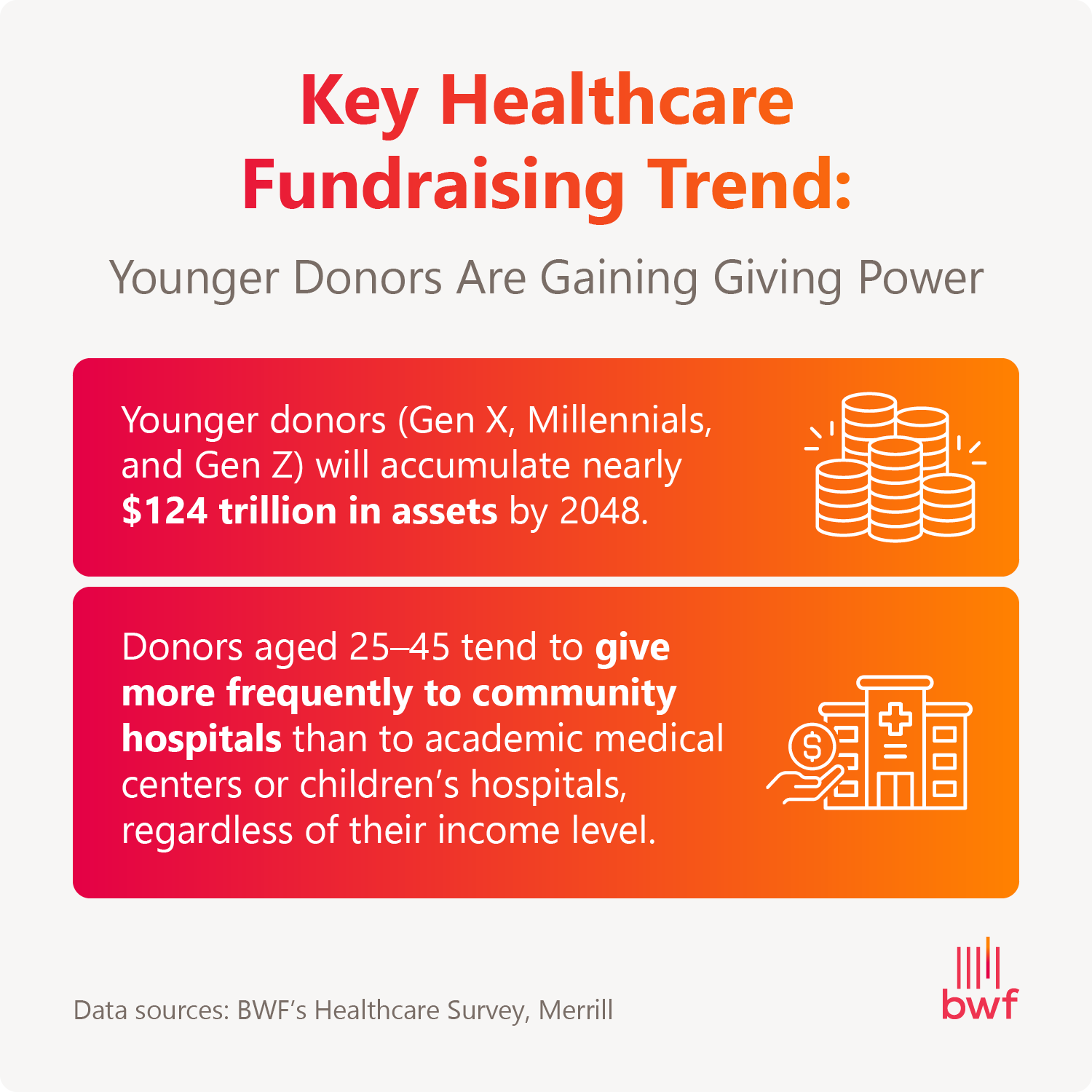
BWF’s healthcare research found that donors aged 25–45 tend to give more frequently to community hospitals than to academic medical centers or children’s hospitals, regardless of their income level. This fact is critical to note, since younger donors (Gen X, Millennials, and Gen Z) will accumulate nearly $124 trillion in assets by 2048.
To capitalize on this trend, known as the Great Wealth Transfer, your healthcare organization needs a plan to intentionally and consistently engage younger donors.
How your hospital should respond
- Connect with younger donors during moments of high engagement with your hospital. While Millennials and Gen Z typically require less intensive care than older generations, they still interact with community hospitals during life-altering moments like childbirth, pediatric emergencies, or visits with elderly relatives. Hospitals can foster authentic relationships during these windows by leveraging the trust that has been built between patients and the healthcare providers treating them or their loved ones. Healthcare providers can act as the bridge connecting grateful patients with your fundraising team.
- Plan engaging events targeted toward younger donors. Over 50% of respondents to BWF’s healthcare survey see events as important to their giving, especially younger donors who often value the social and networking aspects alongside the mission moments. A fun, casual, and entertaining event, not a gala, empowers your hospital to facilitate networking among donors, helping them feel part of a movement rather than just a name on your contact list.
- Start having legacy giving conversations with younger donors. While many organizations reserve planned giving outreach for older demographics, our research suggests a significant missed opportunity among younger donors. Remarkably, 58% of those aged 45 and under have already included a charity in their estate plans, outperforming the 36% of donors aged 45 and over. By prioritizing authentic engagement with this younger cohort now, your organization can lay the foundation for lifelong loyalty and future-proof its philanthropic pipeline.
2. Donors prefer giving to healthcare causes rather than specific hospitals.
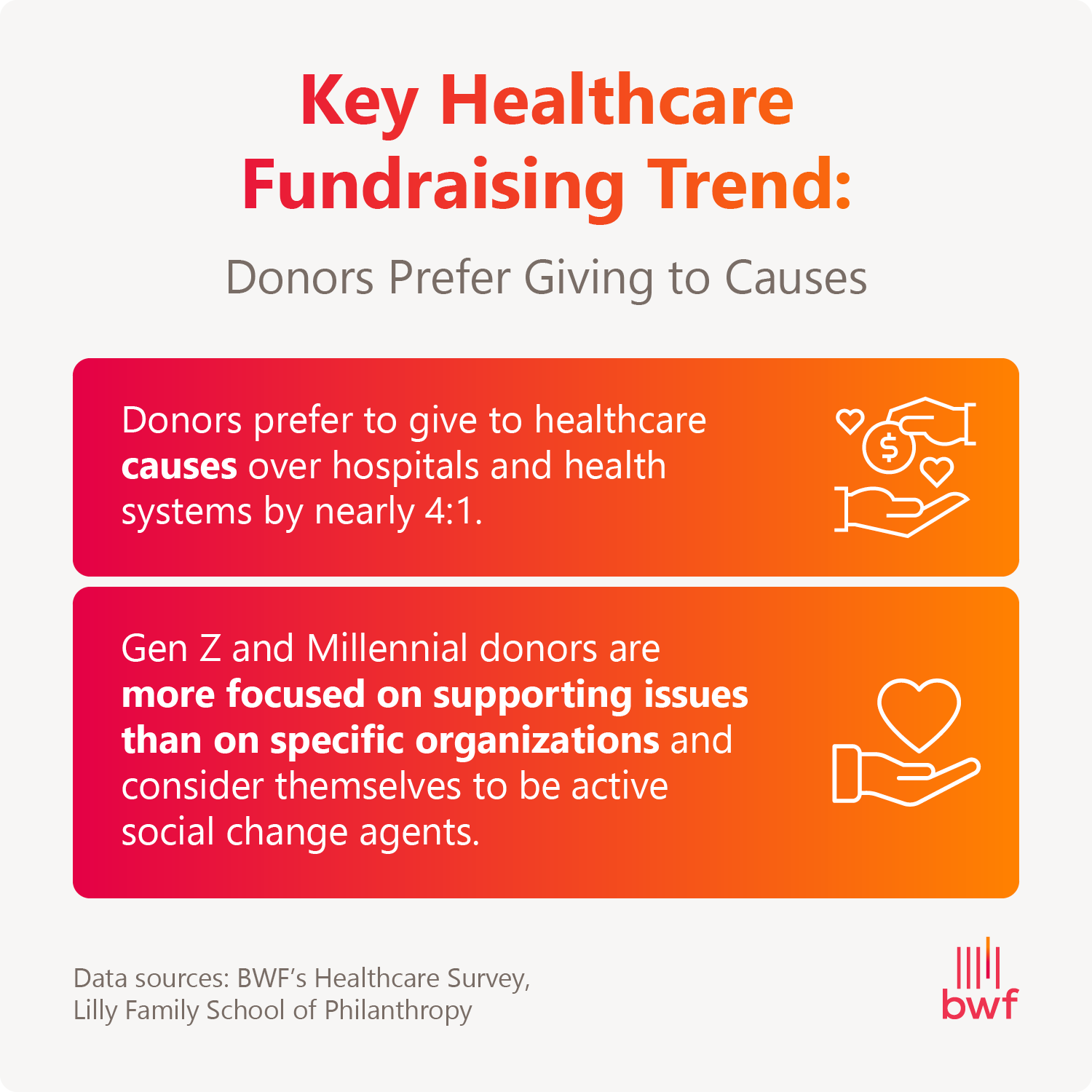
Respondents to BWF’s healthcare survey indicated they prefer to give to healthcare causes over hospitals and health systems by nearly 4:1. Plus, a study by the Indiana Lilly Family School of Philanthropy found that Gen Z and Millennial donors are more focused on supporting issues than on specific organizations and consider themselves to be active social change agents.
The data is clear: donors don’t care about your name brand. They care about the real work you do to support your community and the impact you have on the health of your community, especially areas like care for the underserved, behavioral health care, and pediatrics.
How your hospital should respond
- Make sure donors know your “why.” Focus on the impact of donations and explain how fundraising helps your hospital provide advanced care to your community. For instance, you may send a direct mailer with a story about how you saved a patient’s life using advanced technology you purchased with donor gifts.
- Don’t take donors for granted. Donors know that having an effective local hospital is essential for a thriving community. However, being the closest option isn’t enough to inspire lifelong philanthropy. You must show donors that you are constantly evolving to better serve them. By highlighting improvements like enhanced patient room comfort and increased bedside staffing, you can demonstrate a relentless commitment to the patient experience. This shifts the focus from your hospital’s location to its impact, giving donors a meaningful reason to invest in your future.
3. Most donors prefer online communications.
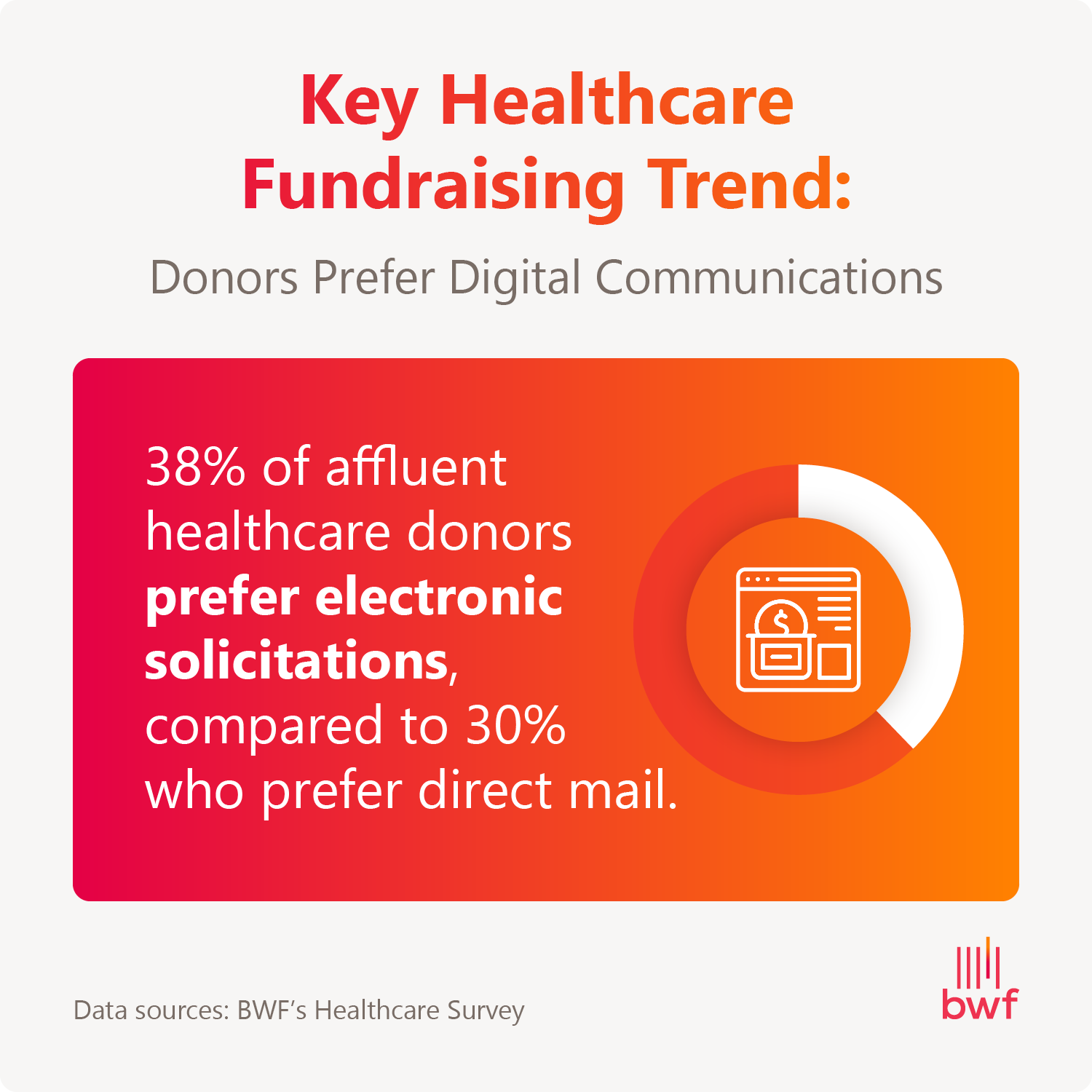
38% of survey respondents prefer electronic solicitations, compared to 30% who prefer direct mail. Younger donors and tech-savvy older donors spend much of their time online, making an optimized digital presence one of your strongest marketing tools.
How your hospital should respond
- Prioritize email and social media outreach. Studies have shown that 32% of donors are most inspired to give via social media, followed closely by email (30%). Ensure your hospital maintains an active presence on social media platforms such as Facebook, Instagram, and YouTube, regularly posting and engaging with public comments. You should also plan to send the majority of your donation requests via personalized emails to each donor, including their names and referencing their past gifts.
- Make online giving as easy as possible. Your website should offer a simple and convenient donor journey. Include links to your online donation form on your homepage and in your top-level menu. Ensure your giving form is easy to complete, with just a handful of fields to collect essential information, such as names and payment details. Allow donors to choose the program they want to support, giving them a more personalized and meaningful experience.
4. Donors want to support people rather than projects.
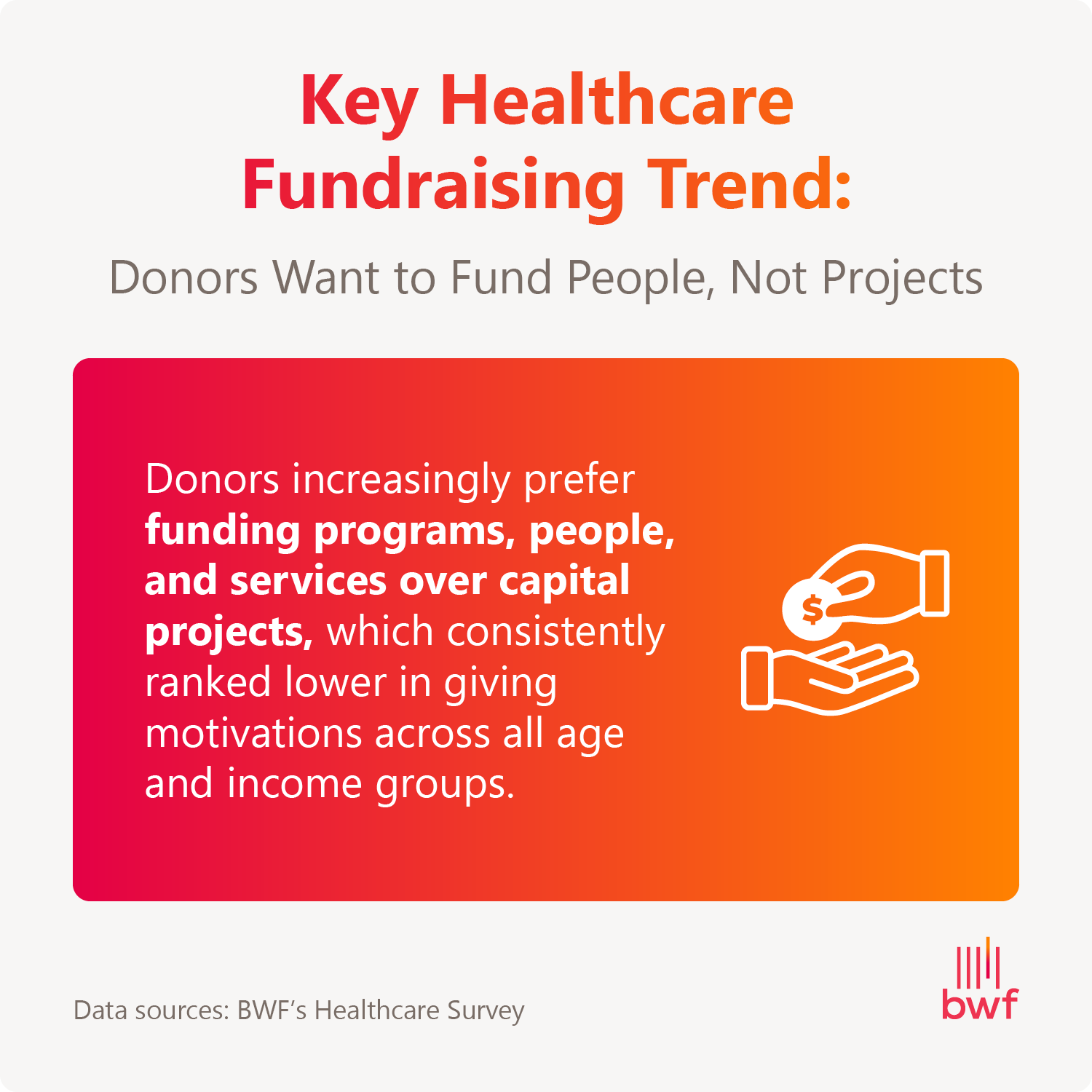
Our healthcare philanthropy study revealed that donors across all age and income groups increasingly prefer funding programs, people, and services over capital projects. Donors feel a stronger emotional connection to your organization when they know their gifts are going directly to those who need them most, instead of being deposited into a savings account for future use.
How your hospital should respond
- Move your focus from capital campaigns to comprehensive campaigns. Comprehensive campaigns meet donors where they are, allowing them to support what matters to them, not simply what your hospital wants. Comprehensive campaigns also integrate financial needs with more compelling mission-related programming priorities and tangible healthcare outcome improvements. These campaign types make donors feel like true partners in your mission rather than ATMs.
- Prioritize “current use” funding for personnel and specialized roles. Ensure your funding priorities include “people-centric” needs, such as nurse residency programs, advanced staff certifications and training, or patient navigator roles. Unlike a capital project that may take years to complete, you can deploy these funds immediately to improve the quality of care. By offering donors the chance to sponsor a staff position or a professional development fund, you’ll help fulfill their desire for an immediate, tangible connection to caregivers.
5. Grateful patient giving should be a top priority.
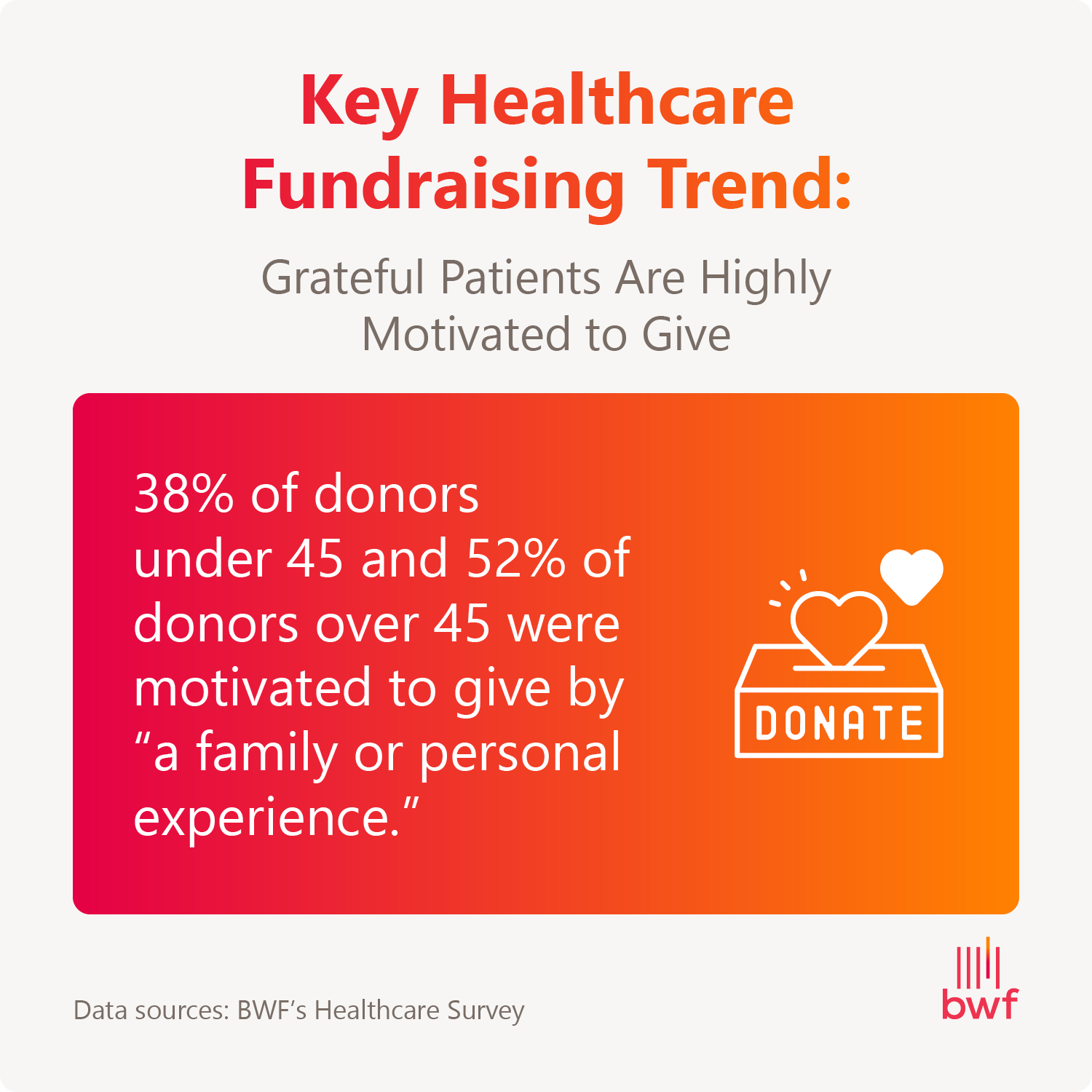
Our survey found that 38% of donors under 45 and 52% of donors over 45 were motivated to give by a family or personal experience. Prioritize engaging with these grateful patients in your fundraising strategy to make the most of their gratitude and foster long-lasting relationships.
How your hospital should respond
- Implement a strategic and intentional approach to grateful patient giving. Ensure your program is built on intentional wealth screening and strategic portfolio management, engagement, and stewardship to proactively avoid any impression of opportunism or ethical issues. Use wealth screening and AI-driven prospect development research to identify capacity, but filter results through a strict ethical and HIPAA-compliant lens.
- Create strong partnerships between your development and clinical teams. Outline clear roles and responsibilities. For example, physicians should focus on medicine and one-on-one patient relationships, while development officers should focus on philanthropy and patient donor relationships. Build trust by creating a feedback loop; when a physician makes an introduction, provide them with updates on the relationship’s progress. This transparency encourages more referrals and reinforces the idea that you respect the clinician’s relationship with the patient and that fundraising enables clinicians to improve their departments.
- Show impact-focused appreciation to grateful patient donors. Grateful patients often give as a way to close out a stressful life chapter. Your response should be an immediate, personalized acknowledgment that mirrors the care they received. Instead of a generic tax receipt, send impact updates that show how their gratitude translates into tangible improvements, such as a specialized training program for the nursing unit that treated them.
Work with BWF to Optimize Your Community Hospital Fundraising Strategy
Here at BWF, we offer much more than just data—we partner with you to create the tailored strategies you need to reach your fundraising goals quickly and effectively.
We have more than 40 years of experience working with healthcare organizations to enhance initiatives such as:
- Grateful patient programs
- Fundraising campaigns
- Major gift strategies
- CRM implementations
- Facilitated access programs
- Data science
- Prospect research
BWF’s healthcare team is composed of seasoned practitioners who have stood in your shoes. Many of our consultants are former development leaders themselves who pair firsthand institutional knowledge with a commitment to industry-wide thought leadership. Through consistent engagement with organizations like the Woodmark Group, AHP, AAMC, NAACDO, and NEAHP, we ensure that our strategies are informed by the most current data and peer-tested best practices in the field.
Explore these additional free healthcare fundraising resources from BWF’s blog:
- Grateful Patient Programs: A Strategic Fundraising Guide. Learn more about how to develop a powerful grateful patient program that drives long-term giving.
- 4 Innovations to Accelerate Healthcare Prospect Identification. Explore tips for more effective prospect identification in healthcare fundraising.
- How to Fundraise for Academic Hospitals and Medical Centers. Dive into tailored fundraising tips specifically for academic hospitals and medical centers.
Let’s Talk
Find out how BWF can support your nonprofit AI strategies and goals.