Redefining the Annual Giving Playbook
How to lead in an evolving fundraising landscape—with data, strategy, and integrity

The Case for Rethinking Annual Giving
We’re in a moment when the old annual giving playbook is breaking. The pressure is real: tight budgets, rising donor expectations, more channels, and more fragmentation. If you lean too heavily on the strategies of old, you risk missing the signals and the donors telling you where the market is going.
Here’s what the data says:
- The Donor Base is Shrinking
- According to the Fundraising Effectiveness Project (FEP), donor counts are falling. In Q1 2025, the smallest donor group ($1–$100) declined by 11.1% year over year. Overall donor numbers were down 1.3%.
- The latest Giving USA report shows giving surged to $592.5 billion (a 6.3% nominal increase) and grew 3.3% after inflation, marking the first time in three years giving outpaced inflation.
- In plain terms, more dollars are being raised from a smaller base of donors, putting pressure on annual giving teams to rebuild the base and the pipeline.
- Trust, Perception, and Institutional Headwinds are Real
- Public trust in nonprofits remains relatively high (57% of Americans say they have high trust in nonprofits), but that’s flat compared to prior years, and there’s growing skepticism toward high-net-worth philanthropy (29% express high trust in wealthy individuals’ giving).
- This is a contributing factor to a decline in donor retention, which decreased by 4.6% in Q3 of 2024. This marks the fourth consecutive year retention has slipped in that quarter.
- Search for Solutions is Getting Harder
- Traditional channels aren’t working like they used to, and ones that experienced growth are beginning to hit a wall.
- M+R Benchmarks reported a 13% drop-in email response rates, and revenue per 1,000 emails sent is down by 10% year over year.
- The digital tools that were supposed to make everything easier are adding their own layers of complexity. Privacy changes are making ad tracking harder. Audience segmentation requires cleaner data than most CRMs can currently provide. Teams are being asked to “do more with less,” but the tools don’t always talk to each other, or to the people using them.
The challenges facing annual giving are not signs that the system is broken beyond repair. They are proof, however, that the environment is changing faster than most playbooks can keep up with—this is where innovation and intention matter most.
By rethinking how we use data, aligning messages across every touchpoint, and embracing technology without losing the human touch, institutions can rebuild momentum and reconnect with the donors who make their missions possible.
At BWF, we have spent years helping organizations navigate this transition by integrating strategy, analytics, and creative execution into one cohesive approach. What follows is a redefined playbook for annual giving, one built not on habit but on insight, adaptability, and a belief that the future of fundraising is still full of opportunity.
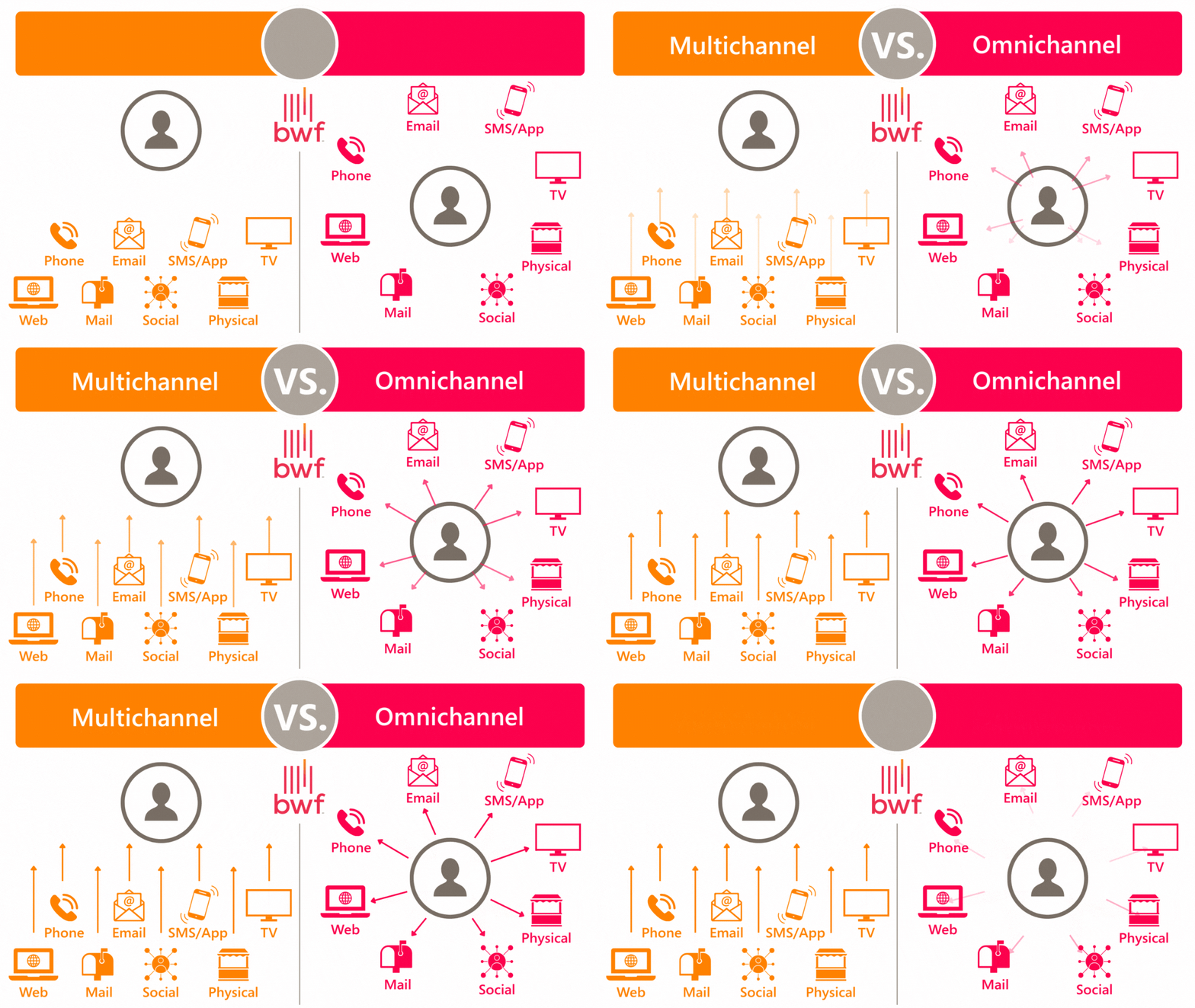
1. Channel Mix & the Case for Omnichannel Strategy
Relying on one or two channels is a risk. Even if your marketing operation exists in silos, that’s not how prospective donors interact with your organization. They see an email on Tuesday, a short video on Thursday, a piece of mail on their counter the following week, and a remarketing ad in between. The goal is not to be everywhere. The goal is to orchestrate a few channels well so that the message is consistent, and the path to give is obvious.
Why Omnichannel Matters
Old fundraising wisdom says people need to hear a message more than once before they respond. That does not mean repeating the same email five times. It means reinforcing the same idea across channels that play different roles. Use email for depth, ads for reach and repetition, short video for story, and mail for permanence. Cross-media planning helps you deduplicate audiences, manage reach and frequency, and understand how each channel contributes to outcomes.
While direct empirical data is limited, several industry sources suggest omnichannel engagement can uplift donor lifetime value by as much as 20-30%. Coupled with the widely accepted principle that improving donor retention (even modestly) yields outsized gains in lifetime value. This reinforces why integrating channels and touchpoints is not optional-it’s a strategic necessity.
Donor-Centric Paths, Not One-Size-Fits-All
Some will respond to a clear call to action in email. Others need to see and hear it a few times in social and video before they click. Our job is to design two or three obvious, low-friction ways to give and to make those paths visible across the places your audiences already spend time. The data supports this too: different platforms reach different people, and usage skews strongly by age cohort, so the “best” channel depends on the audience.
Not every donor needs to receive every touchpoint. High-intent digital subscribers can convert with one or two strong touches plus a reminder. Lapsed donors may need a longer runway that pairs a mailed piece with light paid social ads and an email series. Younger donors are heavier social and video users, while older audiences still respond to mail and email in combination. Use segment-specific cadences rather than blasting everyone with the same tactic.
Next Steps
- Review past campaigns by audience and find repeatable wins. Look at the last 12–18 months. For each key segment, note how many touches before a gift, which channels “opened the door” vs. “closed it,” time between touches, and messages that over-performed.
- Create three lists: what to repeat, what to retire, and where to test.
- Map the journey and give each channel a job. Write the core ask once, then assign roles: email = depth and clarity, ads = reach and repetition, video = story and social proof, mail = permanence and trust, SMS = timely prompt. Keep the CTA and landing path consistent.
The Opportunity: Bring Clarity and Connection

2. Unified Communications & Messaging Framework
Every organization has experienced it. The development team is focused on raising funds for immediate needs. The marketing department is promoting a new campaign theme. Programs are sharing success stories that use entirely different language. Each team is doing good work, but to the outside world, the efforts feel disconnected. When messages compete instead of connect, confusion sets in and confidence erodes.
A unified messaging framework creates a common language for how your organization talks about its mission and impact. It brings discipline to storytelling while leaving room for flexibility. When everyone utilizes the same playbook, you build recognition, trust, and momentum over time.
Why Messaging Alignment Matters
Donors and advocates should hear the same core message across channels. That repetition reinforces credibility, strengthens clarity, and makes your mission easier to remember.
It improves collaboration. When every team—annual giving, marketing, programs, alumni relations, or advocacy—works from the same framework, they can focus their energy on creativity rather than coordination.
It creates efficiency. Once the framework is set, you start every appeal, ad, or video from the same strategic source, which saves time and keeps your brand voice consistent.
Your messaging framework should include the following:
- Core pillars: The foundation of your message—your mission, values, urgency, and proof points. These define what you stand for and why it matters.
- Audience variants: Adapt the message to each group you serve. Supporters, volunteers, corporate partners, and major donors all need to hear the same story, but in language that is relevant to them.
- Voice and tone: Keeping the brand voice consistent is central to brand building. Are you warm and conversational, or bold and visionary? Consistency in tone, style, and authenticity builds familiarity and trust.
- Channel application: Map how the message translates to every channel—email, video, ads, social media, phone scripts, and direct mail. The same message should look and feel familiar across different touchpoints.
Next Steps
- Audit your communications across teams and look for overlap, confusion, or gaps.
- Identify three or four consistent themes that appear most often and use them to develop your messaging framework.
- Create a one-page guide that summarizes tone, language/key messages, proof points, and target audiences so everyone can stay aligned.
Time Allocation and Bandwidth

3. Finding Natural Efficiencies
Every development team today is being asked to do more with the same resources. Efficiency is no longer a nice-to-have, it’s a strategic necessity. The good news is that smarter systems and intentional use of technology can free people to focus on the parts of the work that still require human judgment, creativity, and connection.
Using AI Thoughtfully
Artificial intelligence is reshaping how nonprofit teams plan, write, and analyze, but its impact depends on its use. The best teams treat AI as a partner in productivity, not a replacement for people. It can help brainstorm and test creative variations, analyze donor behavior, and identify patterns that would otherwise go unnoticed. AI cannot capture empathy or intuition, and poor data produces poor outputs. When guided by clear human oversight, however, it can save hours of repetitive work and make campaigns smarter, faster, and more personalized.
Automating to Save Time
Automation is one of the simplest ways to reclaim staff time for high-value work. It keeps routine processes running quietly in the background so your team can focus on what only people can do. Automated welcome journeys, renewal reminders, and stewardship touchpoints can ensure that no donor is forgotten. Even small operational automations (like syncing data between systems or adjusting ad pacing automatically) can eliminate errors and reduce manual labor. Done well, automation makes your operation more consistent and frees bandwidth for strategy and relationship-building.
Scaling Through Paid Media
Paid advertising has become a vital part of the modern channel mix (average ads budget up 11% YoY). With organic reach declining across platforms, ads ensure your message reaches the right audience at the right time. And they aren’t just for acquisition; they also reinforce appeals, boost visibility during campaigns, and help retarget those who have already shown interest. When tied to a clear strategy and consistent message, ads extend the reach of your storytelling without overwhelming your budget.
Next Steps
- Use AI for efficiency, not decision-making or frontline fundraising. Let it help with ideation, first drafts, and light data analysis, but keep human judgment at the center of your work.
- Find one process to automate. Review your team’s recurring tasks and look for anything repetitive, time-consuming, or prone to human error—like reminder emails, donor acknowledgments, or list updates. Start with one task and design a simple automation that removes manual steps without losing personalization.
- Start testing ads in small, focused ways. Use short video or static creative to promote a single campaign, then measure how ads lift engagement across other channels.
Action—Implement the Modern Approach

4. Data That Matters: Behavioral and Marketing Insights
For too long, annual giving programs have been measuring the wrong things—or at least, an incomplete set of things. We often evaluate success by segment performance, response rates, or overall revenue, then move on to the next campaign. But those are surface-level outcomes. They tell us what happened, not why.
Looking Beyond Response Rates
Direct response work, at its core, is about marketing and communications. That means the clues to success often lie upstream: in how we reached, engaged, and moved donors through the journey before the gift. Poor timing in an email cadence, weak audience warming on digital channels, or friction on a giving form are all factors that can undermine a campaign’s success.
Those factors live in data most teams already have: open and click trends, ad engagement metrics, session drop-offs on the giving page, and donor conversion paths. Yet those insights are often scattered across different platforms and departments. The marketing team might hold web analytics, digital might manage ad performance, and advancement services might own the CRM. The result is that the very data that could explain campaign results is fragmented across silos.
Connecting the Dots
To get a true picture of annual giving performance, teams need to connect these data streams and look at the full funnel of behavior leading to a gift. That includes who was reached, how they interacted, how often they were engaged before the ask, and where they dropped off. When viewed together, these behavioral and marketing metrics tell the real story about what’s working and what to fix before the next campaign launches.
Every channel plays a role, and each one generates data that explains how donors move toward a gift. Measuring results from only one or two channels provides an incomplete story. By tracking performance across email, ads, social, and mail together, teams can see how those touchpoints reinforce one another and drive higher engagement overall.
The goal is to bring the right data to the table, in partnership with other teams, so everyone can see how their work contributes to drive mission impact. Annual giving cannot operate in isolation. Understanding and optimizing performance requires collaboration across marketing, data, and advancement systems.
Next Steps
- Redefine success metrics. Go beyond response rates to include engagement, web traffic, ad reach, and form conversion data as part of every campaign review.
- Close the data gaps. Build relationships with the teams who own marketing and web systems so you can access the analytics that explain campaign results.
- Run one campaign debrief using full-funnel data. Bring all touchpoints to the table, from first impression to conversion (i.e., donation form completion), and identify the behaviors that drove results.
Why DAFs Matter

5. Integrating New Giving Vehicles
Donor-advised funds (DAFs) are no longer a niche giving tool. They have become one of the fastest-growing sources of philanthropic capital, holding hundreds of billions of dollars ready to be granted. For annual giving teams, that represents both a challenge and an enormous opportunity.
Why DAFs Matter
The 2024 Donor-Advised Fund Report estimated that DAF assets reached $251.5 billion, with payout rates holding steady at nearly 24%. That means a quarter of those dollars are distributed each year, but the rest awaits direction. The average DAF grant is also significantly larger than a typical online gift, with the median DAF gift ending up 12 times as large as the median non-DAF gift ($300 vs. $25).
Creating a DAF means a donor has taken the time to set aside charitable assets and is looking for the right places to invest them. DAF holders are, by definition, qualified prospects. The question is not whether they want to give—it’s whether your institution is visible and easy for them to support.
The Landscape is Changing
New payment rails and digital solutions are making giving from a DAF easier than ever. Tools like DAFpay from the company Chariot allow donors to complete DAF contributions online in a few clicks. National events such as DAFDay, a Giving Day-esque event for giving via DAFs, are helping raise awareness about this vehicle and encourage donors to distribute funds they already hold.
As these technologies gain traction, annual giving programs need to treat DAFs as part of their mainstream fundraising mix, not a specialty area reserved for planned or major gifts. The opportunity is too large to ignore, and the barriers to participation are quickly disappearing.
Next Steps
- Audit your DAF donor file. Identify everyone who has given through a DAF in the past and evaluate how often they are being engaged or solicited.
- Add or test an online DAF option. If your giving form does not already include an integrated DAF giving tool, explore providers that make this process easier for donors.
- Plan targeted outreach. Create one short campaign to re-engage your known DAF donors and invite them to recommend a new grant this fiscal year.
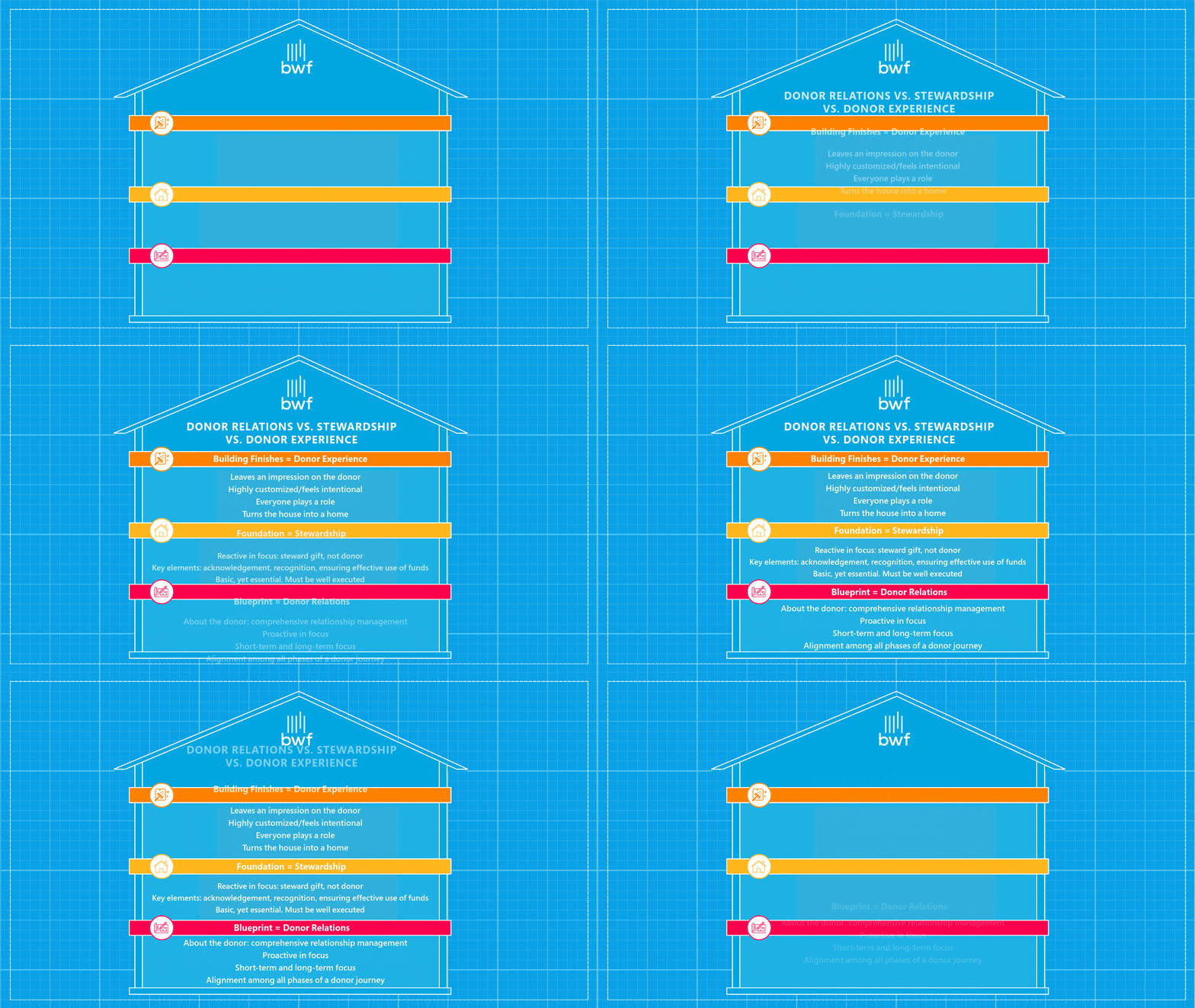
6. Stewardship as Its Own Strategy
Stewardship is often treated as the final step in the fundraising cycle, but it deserves its own plan, resources, and strategy. Thanking donors is not the same as keeping them engaged. True stewardship is an intentional process that builds connection, reinforces trust, and sets the stage for future giving.
Why Stewardship Deserves Its Own Plan
Donor retention rates continue to decline across the sector. According to the Fundraising Effectiveness Project, overall retention fell again in 2024, dropping more than 4% year over year. The best response to that trend is not more solicitation; it is better stewardship.
A thoughtful stewardship strategy ensures that every donor, regardless of size or channel, experiences acknowledgment that feels timely, genuine, and consistent. It is also one of the most cost-effective ways to grow giving. Retaining an existing donor costs far less than acquiring a new one, and the lifetime value of retained donors compounds with every renewed gift.
Building the Stewardship Journey
The best stewardship programs are built around rhythm and relevance. A strong framework likely includes immediate acknowledgement (a quick, personal thank-you that confirms impact and sets expectations for what comes next), ongoing communication (periodic updates that show how donor support is creating change, using a mix of channels—email, social, video, and print), and moments of connection (invitations to events, volunteer opportunities, or behind-the-scenes content that deepen emotional investment).
When such touches are sequenced intentionally, stewardship becomes its own form of cultivation. It builds trust, generates goodwill, and sets the stage for the next gift.
Next Steps
- Map your stewardship journey. Document every touchpoint a donor receives after giving and identify where the experience falls short.
- Automate with intention. Set up triggered acknowledgments and impact messages that maintain personalization while ensuring consistency.
- Create one new touchpoint that shows impact. A short video, a student or client story, or a quick “you made this possible” email can go a long way toward keeping the relationship active.
- Contact our in-house expert, Angela Altamore!
Putting the Playbook into Action
You now have the playbook. The next step is to use it.
Redefining annual giving is not about abandoning the fundamentals that have always worked. It is about building on them with updated insights, stronger alignment, and a more complete understanding of how donors actually experience your organization.
The path forward is clear.
- Use data as your compass. Go beyond outcomes to study the behaviors and moments that drive them.
- Unify your story. Align every channel and every voice so donors hear one clear, consistent message.
- Work smarter. Let technology handle what it can so your people can focus on what matters most: relationships and creativity.
- Embrace change. The tools, channels, and expectations around giving will keep evolving. The institutions that lead will be those that stay curious, adaptable, and bold enough to keep testing new approaches.
At its heart, annual giving has always been about relationships. The channels and tools may change, but the goal remains the same: to inspire connection and make every donor feel part of something larger than themselves.
The next chapter of annual giving will be defined by how well we use the new tools to deepen human connection. This is the real purpose of the playbook — not just to raise more, but to build lasting relationships that move missions forward.
We stand ready to assist you with your strategy. Please reach out! It’s a privilege to help.